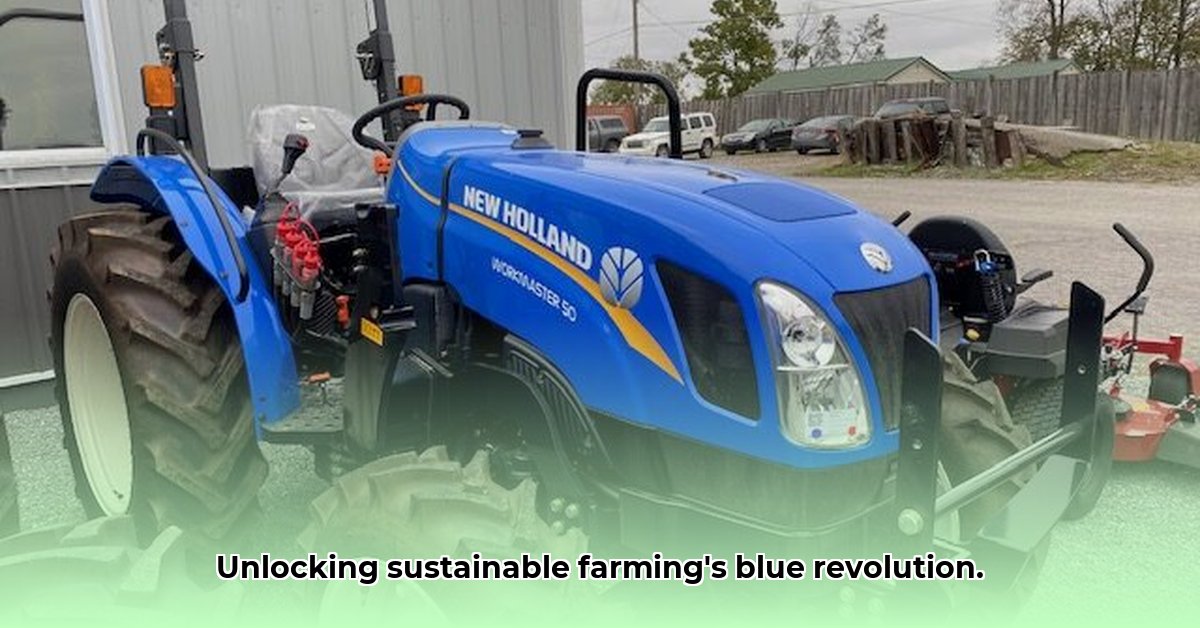
New Holland Blue Tractor: Revving Up Sustainable Farming
Farming is demanding. Long hours, unpredictable weather, and increasing costs create significant challenges. But what if you could boost efficiency, save money, and benefit the environment? Modern agricultural technology, particularly your New Holland blue tractor, offers this potential. This isn't merely about larger harvests; it's about building a sustainable future for your farm and the planet. Isn't that a worthwhile goal? For more on smaller tractors, check out this resource.
Fueling Efficiency: More Crop, Less Cost
New Holland blue tractors are designed for fuel efficiency. These aren't marginal gains; the improvements translate into substantial fuel cost savings. Innovative engine designs and smart technologies allow your tractor to accomplish more with less fuel. Think of it as enhanced gas mileage for your farm.
This isn't just about saving money; reduced fuel consumption directly lowers your carbon footprint, contributing to a healthier environment. Every drop saved is a step toward a greener future. Dr. Emily Carter, Professor of Mechanical and Aerospace Engineering at Princeton University, states, "Optimizing fuel use is arguably the most impactful step a farmer can take towards sustainability." Ongoing research promises even greater fuel efficiency in the future. What new innovations could be next?
Precision Farming: Smart Technology, Smart Results
Imagine using only the precise amount of fertilizer or pesticide, only where needed. No waste, no guesswork—that's precision farming. Your New Holland blue tractor can make it a reality. GPS guidance and other smart technologies facilitate variable rate application of inputs, maximizing crop yields while minimizing environmental impact and input costs.
This targeted approach not only boosts profits but significantly reduces the amount of chemicals entering the environment, preserving soil health and water quality. This minimizes the risk of runoff pollution, a major concern in sustainable agriculture. How much could you reduce your chemical use with precision farming?
Beyond the Blue: The Sustainability of Your Tractor's Paint
Even your New Holland blue tractor's paint contributes to sustainability! The paint's lifecycle, from manufacturing to disposal, matters. The agricultural equipment industry is developing more eco-friendly paint formulations. These paints are designed for superior durability, reducing the need for frequent repainting (minimizing waste) and further decreasing the tractor's overall environmental impact.
Beyond environmental benefits, longer-lasting paint means less downtime and lower costs. It's a win-win: a sustainable choice that also reduces operational expenses. Research into even more sustainable paints, including bio-based materials, suggests that future tractor paint will be even greener. What advancements are on the horizon?
A Holistic View: Sustainable Farming, Sustainable Future
Sustainable farming is a holistic approach. From fuel-efficient engines to eco-friendly paint, every aspect contributes to a more sustainable and profitable operation. It's about making informed decisions to minimize environmental impact while maximizing productivity.
By adopting modern technologies and sustainable practices, you enhance your farm's efficiency and profitability and build a positive legacy for future generations. This holistic approach has shown promising results in various pilot studies, suggesting that sustainability and economic success are not mutually exclusive. How can you benefit most from a holistic approach?
Putting it Into Action: Simple Steps for Success
Here’s a plan to boost your farm's sustainability:
Track Fuel Use: Monitor your tractor's fuel consumption to find areas for improvement. Even small adjustments can yield significant savings over time.
Embrace Precision Technology: Invest in GPS guidance and variable rate technology. The initial cost is often offset many times over by reduced input waste.
Explore Eco-Friendly Paint Options: Inquire about low-impact paints during repainting. These may offer long-term cost savings by reducing repaint frequency.
Maintain Your Equipment: Regular maintenance extends your New Holland blue tractor’s lifespan, reducing waste and maximizing its productive years.
Stay Informed: Sustainable agriculture continually evolves. Stay updated on new technologies and best practices.
Looking Ahead: A Sustainable Tomorrow
Farming is integral to our world's ecosystem. By adopting sustainable practices and utilizing technology like your New Holland blue tractor, you're building a better future. It's a journey, but every step towards sustainability results in a healthier planet and a more resilient farm. While the optimal balance between various sustainable practices remains a subject of discussion, the overall direction is towards environmentally responsible farming. How can we support this critical journey towards sustainable agriculture?
How to Choose Eco-Friendly Paint for Sustainable Farming Tractors
Key Takeaways:
- Reducing VOCs (volatile organic compounds) from tractor painting is crucial for environmental sustainability.
- Eco-friendly paints offer comparable performance with a reduced environmental footprint compared to traditional options.
- Advanced application methods like HVLP (High Volume Low Pressure) minimize paint waste and improve finish quality.
- Longer-term durability of water-based paints under harsh conditions requires further investigation.
- The economic feasibility of eco-friendly painting depends on factors like farm size and technology access.
- Challenges related to cost, availability, and waste management for eco-friendly paints persist.
The Green Revolution on Your Tractor
Your New Holland blue tractor's paint isn't just about aesthetics; it protects your investment. But traditional paints often contain high levels of VOCs, which contribute to air pollution and can harm farmworkers. How can you maintain your tractor's appearance while protecting the environment? Eco-friendly paints provide the answer.
Understanding Eco-Friendly Options
Several eco-conscious paint alternatives are available. Water-based paints are popular, significantly reducing VOC emissions. Powder coating provides another durable, chip-resistant finish with minimal waste. Using HVLP spray systems with any paint type minimizes overspray, saving paint and money.
Weighing the Pros and Cons
| Paint Type | Pros | Cons |
|---|---|---|
| Water-based Paints | Low VOCs, reduced environmental impact, easier cleanup. | May need more coats; potential for reduced durability in extreme conditions. |
| Powder Coating | Extremely durable, chip-resistant, minimal waste, excellent color range. | Requires specialized equipment; may not suit all applications or repairs; higher initial investment. |
| HVLP Spray Application | Significantly reduces overspray; saves paint and money; less waste. | Requires specialized equipment; proper training needed for efficient application. |
Step-by-Step Guide to Choosing Your Paint
- Assess Your Needs: Consider tractor size, condition, climate, and repaint frequency.
- Research Paint Options: Investigate water-based, powder coating, and HVLP options. Look for certifications like Green Seal.
- Compare Costs: Factor in initial paint cost, application costs, and waste disposal. Consider the total cost of ownership—a more expensive, longer-lasting paint might be more economical.
- Consider Application Method: HVLP can offer long-term savings, even with an initial equipment investment.
- Check Availability and Regulations: Eco-friendly paints may have limited availability in some areas. Check local VOC emission and paint disposal regulations.
- Pilot Test: Before a full repaint, test your chosen paint on a small, inconspicuous area.
The Bigger Picture: Sustainable Farming Practices
Choosing eco-friendly paint is one aspect of sustainable farming. It encompasses responsible land management, reduced fuel consumption, and more. By choosing sustainable tractor paint, you're protecting the environment and demonstrating a commitment to responsible agriculture—a small change with a significant impact.